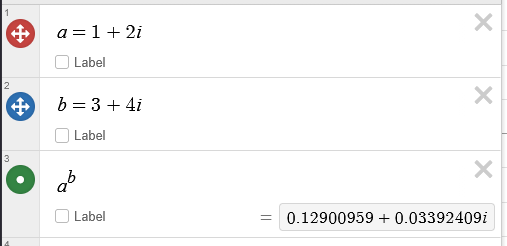
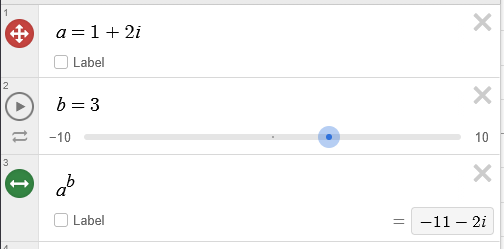
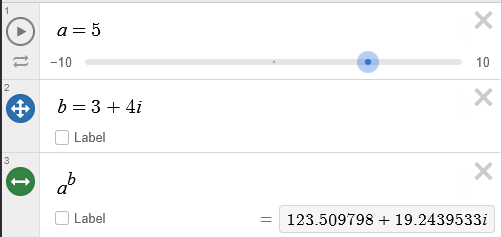
i was bored, so i decided to add complex numbers to luau
This implementation may not be 100% correct as there’s a few functions in this library I vibecoded because I don’t really know them myself, but the basic operations (+, -, * and /) have been tested (as I do know how to test for these)
Complex Source Code
--!native
--!optimize 2

-- Complex Numbers
-- metatablecat 2026
-- This implementation may not be 100% complete, but feel free to contribute!

-- REMARK: Right now, real numbers will remain in complex notation for performance reasons
-- you can return them to reals by simply indexing the part of the complex number you want

export type Complex = typeof(setmetatable({}::{
	Real: number,
	Imaginary: number
}, {}::{
	__add: (self: Complex, other: number | Complex) -> Complex,
	__sub: (self: Complex, other: number | Complex) -> Complex,
	__mul: (self: Complex, other: number | Complex) -> Complex,
	__div: (self: Complex, other: number | Complex) -> Complex,

	__tostring: (self: Complex) -> string,
}))

-- some methods are useful in the metamethod
local COMPLEX_NEW
local function COMPLEX_TEST(complex: Complex, allowReals: boolean): string
	if type(complex) == "number" and allowReals then return "real" end
	if type(complex) ~= "table" then
		error("Attempt to call a complex number method with a non-complex value", 2)
	end

	return "complex"
end

local function COMPLEX_MUL(a: number, bi: number, c: number, di: number): (number, number)
	-- lower level method for just returning the raw numbers
	-- without expensively rehashing the result
	-- (a + bi)(c + di) = ac - (bd)i, (ad + cb)i
	return a*c - bi*di, a*di + bi*c
end

local COMPLEX_MT = {
	__add = function(lhs: Complex, rhs: number | Complex): Complex
		COMPLEX_TEST(lhs, false)
		local rhsType = COMPLEX_TEST(rhs, true)

		if rhsType == "real" then
			return COMPLEX_NEW(lhs.Real + rhs, lhs.Imaginary)
		end

		return COMPLEX_NEW(lhs.Real + rhs.Real, lhs.Imaginary + rhs.Imaginary)
	end,

	__sub = function(lhs: Complex, rhs: number | Complex): Complex
		COMPLEX_TEST(lhs, false)
		local rhsType = COMPLEX_TEST(rhs, true)

		if rhsType == "real" then
			return COMPLEX_NEW(lhs.Real - rhs, lhs.Imaginary)
		end

		return COMPLEX_NEW(lhs.Real - rhs.Real, lhs.Imaginary - rhs.Imaginary)
	end,

	__mul = function(lhs: Complex, rhs: number | Complex): Complex
		-- TIP: This is just the distributive property
		-- z(a + bi) or (a + bi)(c + di) for complex numbers

		COMPLEX_TEST(lhs, false)
		local rhsType = COMPLEX_TEST(rhs, true)

		if rhsType == "real" then
			return COMPLEX_NEW(lhs.Real * rhs, lhs.Imaginary * rhs)
		end

		return COMPLEX_NEW(COMPLEX_MUL(lhs.Real, lhs.Imaginary, rhs.Real, rhs.Imaginary))
	end,

	__div = function(lhs: Complex, rhs: number | Complex): Complex
		-- For this, if its not a number, we first need to figure out the conjugate of the RHS
		-- then multiply both the numerator and denominator by the conjugate,
		-- the denominator will then ALWAYS be real, so we just divide

		COMPLEX_TEST(lhs, false)
		local rhsType = COMPLEX_TEST(rhs, true)

		local nz, ni = lhs.Real, lhs.Imaginary
		local dz, di
		if rhsType == "real" then
			dz = rhs
		else
			nz, ni = COMPLEX_MUL(nz, ni, rhs.Real, -rhs.Imaginary)
			-- shortuct: a conjugate is an expression that gives us a difference
			-- of two squares, so we can just use a^2 + b^2 for dz
			dz = rhs.Real^2 + rhs.Imaginary^2
		end

		return COMPLEX_NEW(nz / dz, ni / dz)
	end,

	__tostring = function(c: Complex): string
		if c.Real == 0 then
			if c.Imaginary == 0 then
				return "(0 + 0i)"
			else
				return `{c.Imaginary}i`
			end
		else
			if c.Imaginary == 0 then
				return tostring(c.Real)
			end

			local complexSign = if math.sign(c.Imaginary) == -1 then "-" else "+"
			local abs = math.abs(c.Imaginary)

			if abs == 1 then
				return `({c.Real} {complexSign} i)`
			end

			return `({c.Real} {complexSign} {abs}i)`
		end
	end,
}

local memoized: {[string]: Complex} = setmetatable({}, {__mode = "v"})
local function complex_hash(a: number, bi: number): string
	return `{a} + {bi}i`
end

function COMPLEX_NEW(real: number?, imaginary: number?): Complex
	local hash = complex_hash(real or 0, imaginary or 0)
	local comp = memoized[hash]

	if not comp then
		comp = setmetatable({
			Real = real or 0,
			Imaginary = imaginary or 0,
		}, COMPLEX_MT)

		memoized[hash] = comp
	end

	return comp
end

local function COMPLEX_conjugate(comp: Complex): Complex
	COMPLEX_TEST(comp, false)
	return COMPLEX_NEW(comp.Real, -comp.Imaginary)
end

local function COMPLEX_normalize(comp: Complex): Complex
	COMPLEX_TEST(comp, false)
	return comp.Real ^ 2 + comp.Imaginary ^ 2
end

local function COMPLEX_abs(comp: Complex): number
	COMPLEX_TEST(comp, false)
	return math.sqrt(comp.Real^2 + comp.Imaginary^2)
end

local function COMPLEX_argument(comp: Complex): number
	COMPLEX_TEST(comp, false)
	return math.atan2(comp.Imaginary, comp.Real)
end

local function COMPLEX_polar(comp: Complex): (number, number)
	-- TODO: should this return a Vector2 if we're in the Roblox namespace?
	return COMPLEX_abs(comp), COMPLEX_argument(comp)
end

local function COMPLEX_unpack(comp: Complex): (number, number)
	return comp.Real, comp.Imaginary
end

local function COMPLEX_isReal(comp: Complex): boolean
	return comp.Imaginary == 0
end

local function COMPLEX_sqrt(comp: Complex): Complex
	local r, theta = COMPLEX_polar(comp)
	local sr = math.sqrt(r)

	return COMPLEX_NEW(
		sr * math.cos(theta / 2),
		sr * math.sin(theta / 2)
	)
end

local function COMPLEX_exp(comp: Complex): Complex
	local er = math.exp(comp.Real)

	return COMPLEX_NEW(
		er * math.cos(comp.Imaginary),
		er * math.sin(comp.Imaginary)
	)
end

local function COMPLEX_log(comp: Complex): Complex
	return COMPLEX_NEW(
		math.log(COMPLEX_abs(comp)),
		COMPLEX_argument(comp)
	)
end

return {
	new = COMPLEX_NEW,

	zero = COMPLEX_NEW(0, 0),
	i = COMPLEX_NEW(0, 1),
	one = COMPLEX_NEW(1, 0),

	abs = COMPLEX_abs,
	argument = COMPLEX_argument,
	conjugate = COMPLEX_conjugate,
	normalize = COMPLEX_normalize,

	polar = COMPLEX_polar,
	unpack = COMPLEX_unpack,
	isReal = COMPLEX_isReal,

	exp = COMPLEX_exp,
	log = COMPLEX_log,
	sqrt = COMPLEX_sqrt
}
This is currently missing support for the ^ operator currently, but I’m sure some of you math nerds will tell me how to implement it lol.
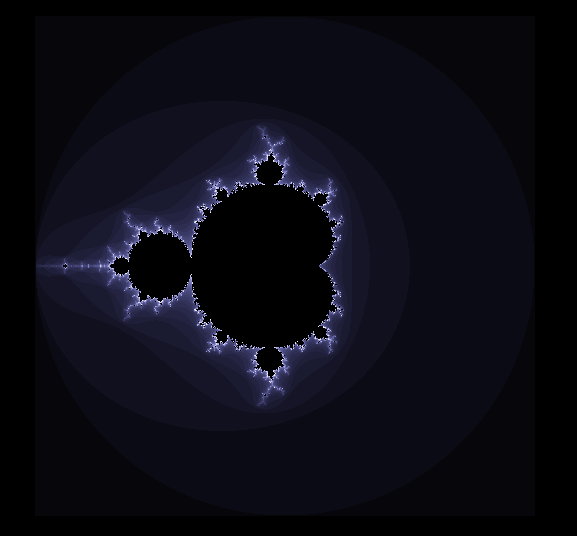


 . It makes exponents cleaner and is quicker to calculate basic operations (since solving sines and cosines is quicker than finding the length/arg).